
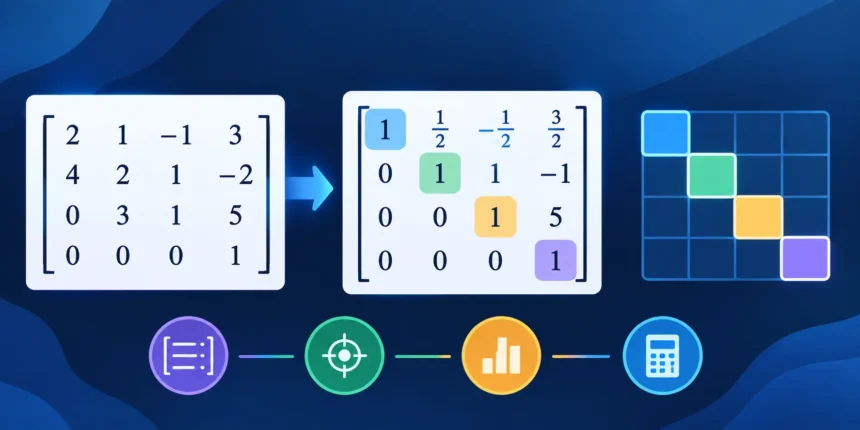
What Is Echelon Form of a Matrix? Definition, Examples, and Methods
What Is Echelon Form of a Matrix? Echelon form of a matrix is a simplified arrangement of a matrix in which the nonzero rows form a staircase pattern from left to right. It is mainly used to solve systems of linear equations, identify pivots, determine the rank of a matrix, and simplify matrix calculations. In simple words, a matrix is…


What Is Graph RAG? How Knowledge Graphs Improve AI Retrieval
Learn Graph RAG, how it works, practical uses, benefits, limitations, implementation, evaluation, and AI engineering best practices.
What Is Model Context Protocol? How AI Connects to Tools and Data
Learn Model Context Protocol, how it works, practical uses, benefits, risks, implementation steps, and best practices for modern AI applications.


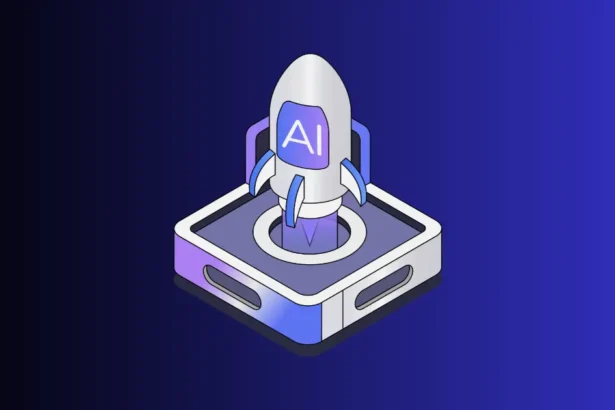
Top 10 AI Startups in USA (2026 Rankings by Valuation)
Top 10 AI Startups in USA The United States is home to…











How to Evaluate a RAG System: Metrics and Testing Framework
Learn RAG evaluation, how it works, where it is used, benefits, limitations,…

How to do Ai Agent Evaluation: Reliability, Safety and Performance
Learn AI agent evaluation, how it works, where it is used, benefits,…
Top 10 Python Libraries for Machine Learning
Top 10 Python Libraries for Machine Learning Python has become one of…
What Is Artificial Superintelligence (ASI)?
Artificial intelligence has evolved from systems designed for narrow tasks to increasingly…
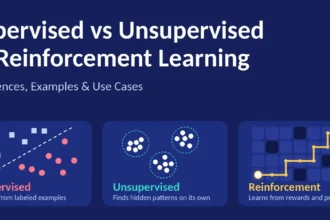
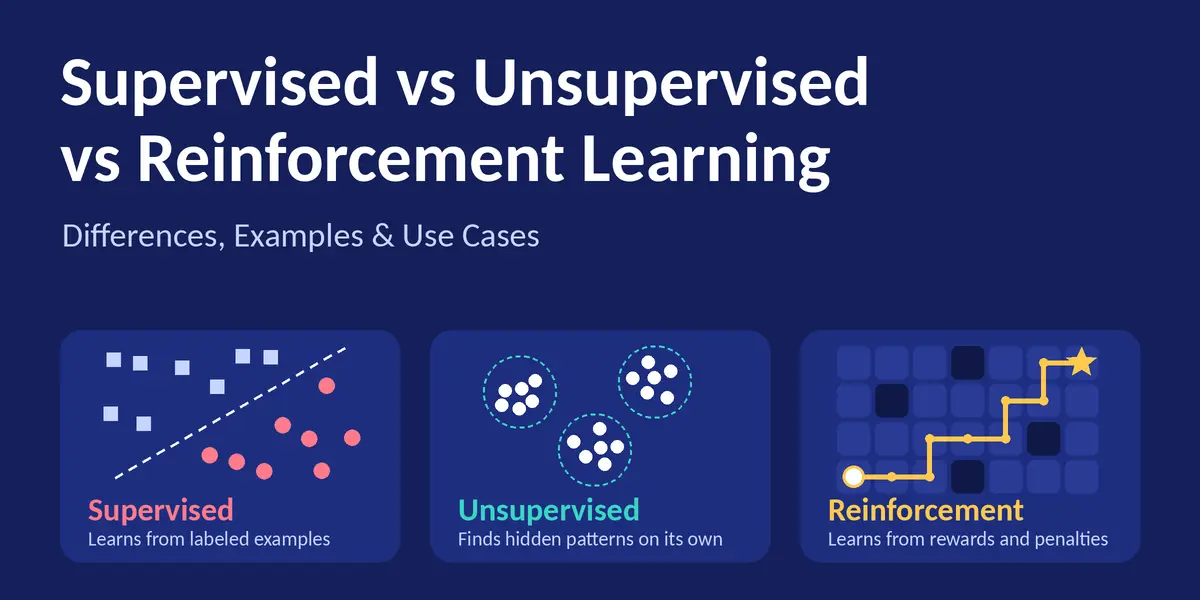
Supervised vs Unsupervised vs Reinforcement Learning: Differences, Examples & Use Cases
Supervised vs Unsupervised vs Reinforcement Learning Machine learning systems can learn in…
What Is Retrieval-Augmented Fine-Tuning? RAG vs Fine-Tuning
Learn RAG vs fine tuning, how it works, practical uses, benefits, limitations,…

What Is AI Evaluation? How to Test AI Models and Applications
Understand AI evaluation, how it works, practical applications, benefits, limitations, implementation guidance,…

What Is AI Caching? How Caching Reduces AI Cost and Latency
Learn AI caching, how it works, practical uses, benefits, limitations, implementation, evaluation,…
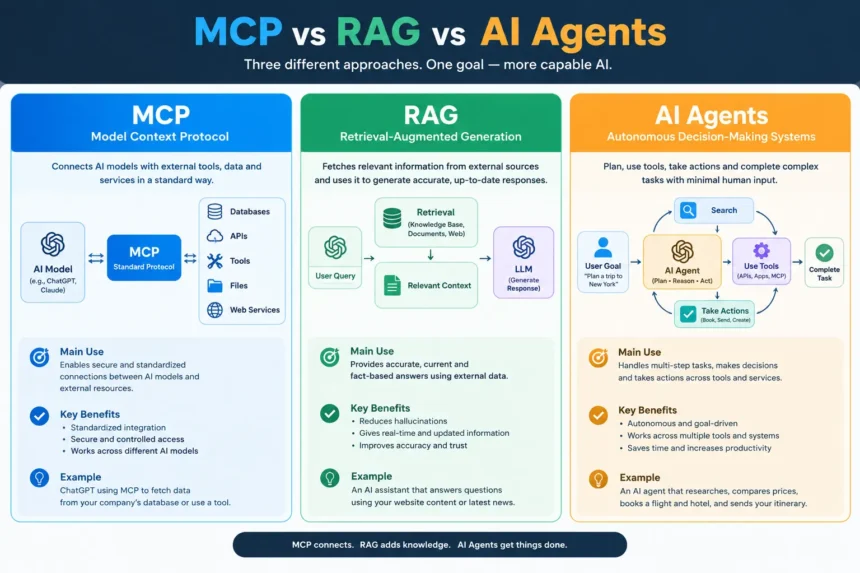
MCP vs RAG vs AI Agents: Key Differences Explained
Artificial intelligence applications are evolving beyond simple question-and-answer chatbots. Modern AI systems can retrieve information from private documents, connect to external applications, call APIs, and coordinate multi-step workflows. Three concepts frequently appear…





What Is Temperature in AI? How Temperature Controls AI Output
Learn AI temperature, how it works, where it is used, benefits, limitations, implementation steps, evaluation methods, and best practices.