
What Is Model Context Protocol?
A language model on its own can only work with what is already in its training data or in the text it is given directly. To be useful in real work, it needs to read live files, query databases, call internal APIs, and take actions in other systems. For years, every one of those connections was custom-built, tightly coupled to one specific AI provider’s API format and one specific external tool’s interface. The Model Context Protocol was created to fix that.
This guide explains what MCP is, how its architecture works, why it emerged, how it differs from standard function calling, where the ecosystem stands today, and the security risks that come with letting an AI system connect directly to external tools.
What Is Model Context Protocol?
Model Context Protocol, or MCP, is an open standard that gives AI applications a consistent way to connect to external tools, data sources, and services. It was introduced by Anthropic in November 2024, alongside a set of reference servers for systems like GitHub, Slack, Google Drive, and Postgres. Rather than building a separate, custom integration for every pairing of an AI application and an external system, developers implement MCP once on each side, and any MCP-compatible AI application can talk to any MCP-compatible server.
The comparison people reach for most often is USB-C. Before a common standard, every device needed its own proprietary cable and port. Once a shared standard existed, any compliant device could connect to any compliant port. MCP aims to do the same thing for AI-to-tool connections that used to require bespoke integration work for every combination of model and system.
The Problem MCP Solves
Before a shared protocol existed, connecting an AI application to an external system meant writing a custom integration tied to two things at once: the specific AI provider’s function-calling format, and the specific external tool’s own interface. A team that wanted their AI assistant to query a Postgres database wrote one integration. Adding Slack access meant writing another, in a different shape. Switching the underlying model provider often meant rewriting some of that integration work again, since function-calling schemas were not portable between providers.
This created what is sometimes called an N times M integration problem: with N different AI applications and M different external tools, the number of custom integrations needed grows with N multiplied by M rather than staying manageable. A shared protocol turns that into an N plus M problem instead. Each AI application implements the protocol once. Each external tool exposes an MCP server once. Any combination of the two then works without additional custom glue code.
How MCP’s Architecture Works
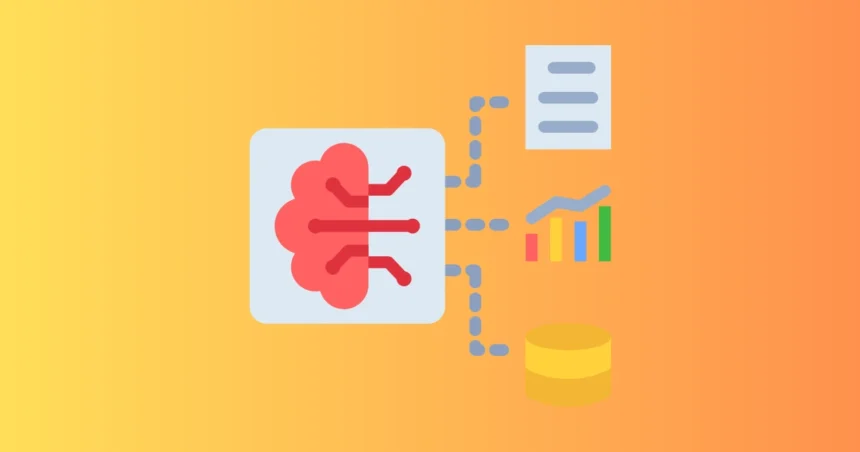
MCP follows a client-server architecture built around three roles.
The host is the AI application the end user actually interacts with, such as a chat interface, an IDE, or an agentic coding tool.
The client lives inside the host and manages the connection to one specific MCP server, handling the technical details of the protocol on the model’s behalf.
The server is a separate, often lightweight process that exposes specific capabilities, such as database access, file reads, or API calls, to any client that connects to it.
Communication between clients and servers runs on JSON-RPC 2.0, a lightweight remote procedure call format. Servers can run locally over standard input and output for tools that live on the same machine, or remotely over HTTP-based transports for tools that live on a separate server or in the cloud. The protocol has continued to evolve since its initial release, including changes to how remote connections are established and how capabilities are discovered.
MCP servers expose their capabilities through three main primitives. Tools are functions the model can call to take an action, such as creating a ticket or running a query. Resources are pieces of data the model can read, such as a file or a database record. Prompts are reusable, parameterized instruction templates that a host application can offer to the user or the model. A single server can expose any combination of these three, and a host application can connect to multiple servers at once, giving the model access to several different systems within one conversation or task.
How MCP Differs From Standard Function Calling
Function calling, sometimes called tool use, is the underlying model capability that lets a language model decide to invoke a defined function and receive its result back into the conversation. This capability existed before MCP and still underlies how MCP tool calls actually work at the model level. The difference is what sits around that capability.
Without a shared protocol, the function definitions available to a model were defined per application, in whatever schema that specific AI provider’s API expected, and connecting to a new external system required custom code translating between the model’s expected format and that system’s actual interface. MCP standardizes that surrounding layer: how tools are described, how they are discovered, how results are returned, and how a host application connects to a server in the first place. Function calling is the mechanism a model uses to invoke a tool. MCP is the standardized layer that makes tools from many different systems discoverable and usable across many different AI applications without one-off integration work for each pairing.
Adoption and Ecosystem Growth
MCP moved from a single-company release to a broadly adopted standard unusually quickly. OpenAI adopted MCP across its products in March 2025, including support in the ChatGPT desktop app, which was widely seen as the signal that turned MCP into a cross-vendor standard rather than an Anthropic-specific tool. Google DeepMind, Microsoft, and a growing number of enterprise software vendors followed with their own MCP support.
In December 2025, Anthropic donated the protocol to the Agentic AI Foundation, a directed fund within the Linux Foundation co-founded by Anthropic, Block, and OpenAI, moving governance of the standard to a vendor-neutral body rather than keeping it under a single company’s control. By early to mid-2026, official SDKs existed for TypeScript, Python, C#, Java, and Swift, combined SDK downloads had reportedly crossed tens of millions per month, and public MCP server counts had grown well into the thousands, covering databases, file storage, messaging platforms, project management tools, and developer tooling like GitHub and Sentry.
It is worth distinguishing MCP from a related but separate effort called Agent2Agent, or A2A, which focuses on communication between multiple AI agents rather than between an agent and a tool. The two protocols address different layers of an agentic system: MCP for agent-to-tool connections, and A2A-style protocols for agent-to-agent coordination. Mature agentic deployments increasingly use both together rather than treating them as competing standards.
Practical Applications
- Developer tooling. Coding assistants and agentic coding tools use MCP to pull live data from GitHub, Jira, or Sentry, letting a developer ask for a pull request summary based on an actual diff rather than pasted text.
- Enterprise knowledge access. MCP servers expose internal wikis, ticketing systems, and document stores, letting an AI assistant answer questions grounded in a company’s live internal data rather than only its training data.
- Business process automation. Agents connected to MCP servers for systems like Slack, email, or CRM platforms can take multi-step actions across those systems within a single task.
- IDE integration. Development environments such as Cursor, Zed, and Windsurf embed MCP clients directly, giving an AI coding assistant real-time access to project context beyond what is visible in the current file.
Security Risks Specific to MCP
Giving an AI system a standardized way to connect to external tools also gives it a standardized attack surface, and MCP-specific security research has identified several distinct risk patterns worth understanding before deploying it broadly.
Tool poisoning. When a host connects to an MCP server, the server returns descriptions of its available tools, and those descriptions are added directly to the model’s context. If a malicious or compromised server embeds hidden instructions inside what looks like ordinary help text, the model can read and follow those instructions without the user ever seeing them, since tool descriptions are typically reviewed once at connection time rather than checked on every use.
Rug pull attacks. A server that was reviewed and approved when a connection was first established can be modified afterward, changing its tool descriptions or behavior after the trust decision was already made. Because that initial approval is often not re-checked automatically, a server can turn malicious well after it was cleared.
Indirect prompt injection through tool responses. Rather than poisoning the tool description itself, an attacker can embed hidden instructions in the data a tool returns, such as a file, a web page, or an API response, so the injected content reaches the model’s context through what looks like a normal, legitimate result.
Cross-server shadowing and context poisoning. When multiple MCP servers are connected to the same client, a malicious server can, in some cases, use its own tool descriptions to influence how the model behaves toward a separate, trusted server, or corrupt shared state that other components later treat as reliable, spreading the effect of one compromised server across an otherwise trustworthy set of connections.
Security researchers and standards bodies studying this space have generally converged on a layered response rather than a single fix: maintaining a verified registry of trusted servers, pinning server versions rather than trusting a name alone, inspecting tool descriptions and responses for suspicious content, logging every tool invocation with enough detail to trace an action back to its source, and keeping a human in the loop for higher-risk actions. The MCP specification itself acknowledges this last point directly, stating that a human should generally have the ability to deny a tool invocation, though enforcing that in practice is left to the applications and organizations deploying it.
Common Mistakes
- Connecting an MCP server without verifying who maintains it, treating an open ecosystem of thousands of servers as uniformly trustworthy.
- Reviewing a server’s tools once at connection time and never re-checking them, which leaves an opening for rug pull attacks after approval.
- Confusing MCP with function calling itself, when MCP is the standardized connection and discovery layer built around that underlying model capability.
- Granting an MCP-connected agent broad, standing permissions instead of scoping access narrowly to what a specific task actually requires.
- Treating MCP purely as a developer convenience without accounting for the fact that it also expands the model’s attack surface to every connected server.
Frequently Asked Questions
Is MCP the same as function calling? No. Function calling is the model-level capability to invoke a defined function and use its result. MCP is the standardized protocol layer that makes tools, data, and prompts from many different external systems discoverable and connectable across many different AI applications, without custom integration work for each pairing.
Who governs MCP now? Anthropic introduced MCP in November 2024 and donated it to the Agentic AI Foundation, a Linux Foundation initiative co-founded by Anthropic, Block, and OpenAI, in December 2025, making it a vendor-neutral, community-governed standard rather than a single company’s proprietary format.
Is MCP safe to use in production? MCP itself is a protocol, not a guarantee of safety. Its security depends heavily on which servers are connected, how much they are trusted, and what technical and organizational controls, such as version pinning, tool description inspection, and human approval for sensitive actions, are in place around it.
How is MCP different from A2A? MCP standardizes how an AI agent connects to tools and data sources. A2A-style protocols standardize how multiple AI agents communicate and coordinate with each other. They address different layers of an agentic system and are increasingly used together rather than as alternatives.
Key Takeaways
MCP is an open, now vendor-neutral standard that solves the integration problem created when every AI application needed a custom connection to every external tool it used. Its client-server architecture, built on tools, resources, and prompts exposed by servers, has been adopted broadly enough in a short time to become close to a default expectation for agentic AI systems. That same openness is also its central risk: because tool descriptions and responses are read into the model’s context as trusted information, a compromised or malicious server can manipulate agent behavior in ways that standard input sanitization does not catch, which is why serious deployments treat server trust, version pinning, and human oversight as necessary parts of using MCP rather than optional extras.
Conclusion
MCP addressed a real and growing problem: AI systems that were becoming more capable reasoners while remaining largely isolated from the live systems people actually needed them to act on. Its rapid, cross-vendor adoption suggests that standardizing the connection layer between AI and the rest of the software world was overdue rather than premature. At the same time, the same mechanism that makes MCP powerful, giving a model direct, standardized access to external tools and data, is exactly what security researchers are now focused on, and any team adopting it seriously needs to treat tool trust and access scope as first-class design decisions, not an afterthought.

AiVoogle – AI Tutorials & AI Tools
AiVoogle is an AI-focused platform sharing practical AI tutorials, AI tools, guides, reviews, and the latest trends in artificial intelligence. Our goal is to make AI simple, useful, and accessible for everyone—from beginners and creators to marketers, developers, and businesses.
The AiVoogle team researches and covers the latest AI tools and technologies to help readers discover the right tools and learn how to use AI effectively.
Focus: AI Tutorials | AI Tools | AI Guides | AI News | AI Reviews