
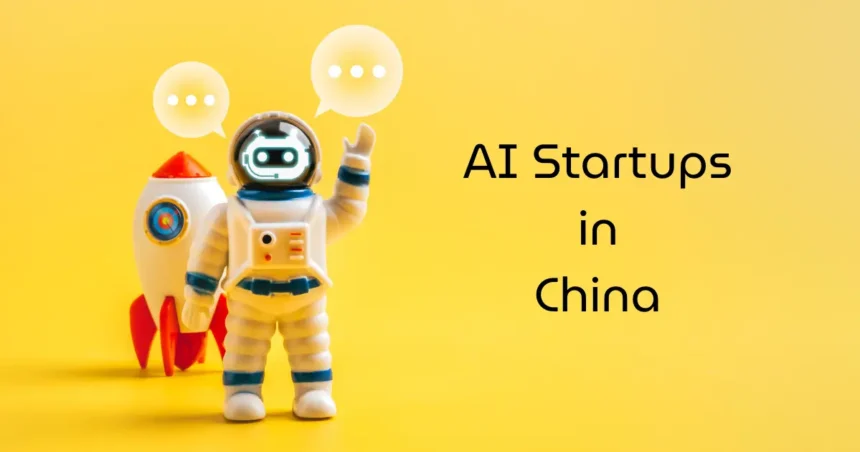
China’s AI startup scene has moved faster in 2026 than almost anywhere else in the world. The country produced 67 new unicorn companies in the first half of the year alone, the fastest pace in nearly five years, and two of its best-known AI labs completed initial public offerings within a day of each other in January. This list of the top 10 AI startups in China is ordered by a mix of valuation, funding raised, and current market significance, based on the most recent data available through 2026.
A caveat before the list: China’s AI sector is moving through IPOs, mega-funding rounds, and strategic pivots at a pace that makes any snapshot ranking outdated within months. Several companies below have gone public or completed large private rounds within the same year this article was written, and figures reported by different outlets can vary by billions of dollars depending on the exact date referenced.
1. DeepSeek
Valuation: approximately $50 billion to $71 billion
DeepSeek is the Hangzhou-based AI lab whose low-cost, high-performance models rattled the global AI industry in January 2025. After three years operating purely on its founder’s own capital, DeepSeek completed its first outside funding round in 2026, raising roughly $7.3 to $7.4 billion, the largest first-round raise by a Chinese startup on record, at a valuation of more than $50 billion, with later reports suggesting talks around a $71 billion figure. DeepSeek has never disclosed revenue, but its aggressive pricing has set a cost benchmark for the entire industry, and it completed a full migration from Nvidia’s CUDA platform to Huawei’s Ascend CANN software stack, making it the first frontier AI model developer to operate independently of Nvidia hardware.
2. Zhipu AI (Z.ai)
Market capitalization: over $100 billion as of July 2026
Zhipu AI, founded in 2019 out of Tsinghua University and now also known internationally as Z.ai, became the world’s first publicly traded pure-play foundation model company when it listed in Hong Kong on January 8, 2026, raising roughly $555 million in its IPO. Its stock has climbed sharply since then, crossing $100 billion in market capitalization by July, a valuation built on a strategy of doubling down on government relationships and open-source ecosystem lock-in through its GLM model family rather than chasing consumer scale in the way some of its peers have. Its on-premise revenue more than doubled in 2025 while cloud revenue grew nearly 300 percent, though the company still runs at a significant loss relative to its market value.
3. MiniMax
Valuation: approximately $33 billion
MiniMax listed in Hong Kong one day after Zhipu, on January 9, 2026, raising roughly $615 million in its IPO. The Shanghai-based company has taken a more consumer-facing approach than most of its peers, building Hailuo AI for video generation and Talkie for AI-driven character interaction, alongside an open developer platform. Its 2025 revenue grew nearly 159 percent year over year, and its valuation climbed further through 2026 on the strength of that consumer product traction.
4. Moonshot AI
Valuation: approximately $20 billion to $35 billion
Moonshot AI, maker of the Kimi chatbot, closed a $2 billion round at a $20 billion valuation in May 2026, with later reporting suggesting its value climbed further amid renewed investor enthusiasm for China’s foundation model sector. Kimi’s annual recurring revenue reportedly broke $100 million in March 2026 and roughly doubled by April, still a small base relative to its valuation, but a sign of accelerating commercial traction for an open-weight model family that has drawn attention for its underlying quality.
5. Unitree Robotics
Market capitalization: approximately $50 billion to $66 billion
Unitree, based in Hangzhou and officially known as Yushu Technology, became the first publicly listed pure-play humanoid robotics company in mainland China when it debuted on Shanghai’s STAR Market on August 19, 2026. Priced at roughly a $9 billion valuation, its shares surged as much as 629 percent on debut before settling to close up around 460 percent, valuing the company at somewhere between $50 billion and $66 billion depending on which day’s closing price is referenced. Known globally for its backflipping and dancing humanoid and quadruped robots, Unitree drew strategic investment from DeepSeek as part of its IPO, and its listing is widely viewed as a milestone moment for China’s broader embodied AI and robotics push. Like Cursor’s acquisition by SpaceX in the US market, Unitree’s IPO means it is technically no longer a private startup, but its scale and rapid rise still make it essential to understanding China’s AI landscape.
6. StepFun
Valuation: raising at an estimated $2.5 billion-plus round, restructuring for a Hong Kong listing
StepFun differentiated itself among China’s AI startups by focusing on multimodal models that incorporate both text and video input, and its models have shipped into more than 42 million devices, though that install base does not directly translate into disclosed revenue. As of mid-2026, StepFun was restructuring in preparation for a Hong Kong IPO while also reportedly pivoting further into hardware, a shift that has led some observers to describe it as evolving away from a pure foundation-model company into something closer to a device maker.
7. Baichuan AI
Valuation: approximately $2.9 billion
Baichuan Intelligence, founded by former Sogou CEO Wang Xiaochuan, took a notably different path than most of its foundation-model peers by pivoting significantly toward healthcare applications, a move that narrowed its addressable market considerably but may have improved its odds of sustainable differentiation in a crowded field. The company last raised roughly $735 million at a $2.9 billion valuation, positioning it as one of the more modestly valued members of China’s original “Six Tigers” cohort of independent foundation model startups.
8. 01.AI
Valuation: not publicly disclosed at a comparable scale to its peers
01.AI was founded by Kai-Fu Lee, one of the best-known figures in Chinese AI investment and research, and built its early reputation on the Yi series of foundation models. More recently, the company has shifted away from foundation model development itself toward AI-enabled enterprise services, a strategic pivot that reflects how difficult it has become for smaller foundation-model labs to keep pace with the capital intensity of DeepSeek, Zhipu, and Moonshot at the frontier.
9. X Square Robot
Valuation: approximately $2.9 billion
Founded in 2023 and based in Shenzhen, X Square Robot builds end-to-end embodied AI systems around its WALL family of foundation models, aiming to let robots perceive, judge, and carry out complex physical tasks without relying on traditional rule-based programming. The company has raised roughly $588 million across four consecutive funding rounds, with backers including Alibaba, ByteDance, and Meituan, and its QUANXTA data platform addresses one of embodied AI’s core bottlenecks: collecting and annotating real-world robotic training data at scale.
10. Spirit AI
Valuation: approximately $2.78 billion
Spirit AI, founded in February 2024, is one of the newest companies on this list and one of the fastest to reach unicorn status, raising roughly $625 million across four rounds between February and May 2026. Its embodied foundation model, Spirit v1.5, was open-sourced in January 2026 and reportedly outperformed Nvidia’s comparable Pi0.5 model on standard benchmarks, positioning the company among a wave of software-first, or “brain,” companies in China’s embodied AI sector that compete on model quality rather than owning their own robotic hardware.
Comparison at a Glance
| Rank | Company | Valuation / Market Cap | Core Focus |
|---|---|---|---|
| 1 | DeepSeek | ~$50B–$71B | Cost-efficient frontier foundation models |
| 2 | Zhipu AI (Z.ai) | ~$100B+ (public) | Foundation models, GLM series |
| 3 | MiniMax | ~$33B (public) | Consumer AI, video and character generation |
| 4 | Moonshot AI | ~$20B–$35B | Kimi chatbot, open-weight models |
| 5 | Unitree Robotics | ~$50B–$66B (public) | Humanoid and quadruped robots |
| 6 | StepFun | $2.5B+ round in progress | Multimodal models, pivoting to hardware |
| 7 | Baichuan AI | ~$2.9B | Healthcare-focused AI |
| 8 | 01.AI | Undisclosed | AI enterprise services |
| 9 | X Square Robot | ~$2.9B | Embodied AI, robotics foundation models |
| 10 | Spirit AI | ~$2.78B | Embodied AI, software-first robotics models |
What This List Reveals About China’s AI Market
A few patterns distinguish China’s AI startup landscape from the US and Japanese markets covered in comparable rankings.
The public markets have become a real exit path, not just a distant goal. Zhipu, MiniMax, and Unitree all went public in 2026, and StepFun is actively restructuring to follow. This stands in contrast to the US market, where the largest AI labs remain private and are more often absorbed through acquisition, as seen with Cursor and SpaceX, than through IPO.
Cost efficiency is a competitive strategy, not just a side effect. DeepSeek’s entire market position rests on demonstrating strong performance at a fraction of the compute cost of its Western counterparts, and its pricing has pressured the rest of the industry to compete on efficiency rather than scale alone.
Hardware independence is becoming a genuine differentiator. DeepSeek’s migration off Nvidia CUDA onto Huawei’s Ascend software stack reflects a broader national push toward reducing dependence on foreign chip supply chains, a theme that shows up across China’s AI sector far more prominently than in the US or Japanese markets.
Embodied AI and robotics have become the newest major wave. Unitree, X Square Robot, and Spirit AI represent a surge of humanoid and embodied AI unicorns that absorbed billions of dollars in the first half of 2026 alone, a pace some industry analysts describe as unprecedented even compared to the earlier large language model funding frenzy of 2023.
Differentiation through specialization is replacing head-to-head competition. What began as six broadly similar foundation-model startups, often called China’s “Six Tigers,” has splintered into distinct strategies: Zhipu toward enterprise and government relationships, MiniMax toward consumer entertainment, Baichuan toward healthcare, and 01.AI away from foundation models entirely toward services, suggesting the market no longer rewards multiple companies pursuing the identical general-purpose strategy.
Frequently Asked Questions
Which is the most valuable AI startup in China? DeepSeek and Zhipu AI are the two largest by different measures. DeepSeek’s private valuation is estimated between $50 billion and $71 billion, while Zhipu, now publicly traded in Hong Kong, has a market capitalization that crossed $100 billion by July 2026, making direct comparison difficult since one is a private valuation and the other a public market price.
Are Zhipu, MiniMax, and Unitree still considered startups? Technically no, since all three have completed public listings in 2026, but they remain central to any discussion of China’s AI industry given how recently they went public and how closely their trajectories are still tied to the broader private AI funding ecosystem.
What is China’s “Six Tigers” cohort? It refers to six leading independent foundation model startups, Zhipu, Moonshot, MiniMax, Baichuan, StepFun, and 01.AI, that emerged as China’s most closely watched AI labs starting around 2023. By 2026, the six had diverged sharply in strategy and valuation, with some pursuing IPOs and others pivoting away from foundation models entirely.
Why is embodied AI and robotics such a large part of this list? China’s embodied AI and robotics sector absorbed billions of dollars in funding in the first half of 2026 alone, with more than a dozen companies reaching unicorn status in that period, reflecting both strong government support and Jensen Huang’s public framing of 2026 as a key commercialization year for humanoid robots.
Conclusion
The top 10 AI startups in China for 2026 reflect an industry moving on two fronts at once: foundation model companies competing on cost efficiency and hardware independence from Nvidia, and a fast-emerging embodied AI and robotics sector attracting funding at a pace with few precedents in the country’s startup history. With three companies on this list already public and at least one more actively preparing to follow, China’s AI startup landscape is consolidating into public markets faster than its counterparts in the US or Japan, a dynamic likely to reshape this ranking again within the next year.

AiVoogle – AI Tutorials & AI Tools
AiVoogle is an AI-focused platform sharing practical AI tutorials, AI tools, guides, reviews, and the latest trends in artificial intelligence. Our goal is to make AI simple, useful, and accessible for everyone—from beginners and creators to marketers, developers, and businesses.
The AiVoogle team researches and covers the latest AI tools and technologies to help readers discover the right tools and learn how to use AI effectively.
Focus: AI Tutorials | AI Tools | AI Guides | AI News | AI Reviews